Protein Calculator for Women Over 40: How to Find Your Target Without a Meal Plan
If you have typed “protein calculator” into a search bar lately, you already know the frustration. Every calculator wants a different number. Some ask for your weight. Some ask for your body fat. Some want to know your activity level on a scale from “couch” to “athlete,” and you are not sure which box a 45-minute strength session three times a week actually belongs in.
So let’s cut through it. Here are the questions women over 40 actually ask about protein calculators, answered plainly.
What does a protein calculator actually measure?
A protein calculator takes a few inputs – usually your body weight, sometimes your activity level – and multiplies them by a grams-per-kilogram-of-body-weight target. That’s it. Behind the clean interface, it’s arithmetic.
Two things it is not doing:
It is not measuring your blood, your hormones, or your muscle. It cannot tell you what is happening inside your body.
It is not personalized to midlife. Most calculators were built around a generic adult, and “generic adult” was never you.
Think of the result as a starting point, not a verdict. A calculator gives you a number to test. Your job is to test it.
Why the standard numbers often don’t fit after 40
The common daily protein recommendation you’ll see in older guidance – around 0.8 grams per kilogram of body weight – was designed to prevent deficiency in a sedentary adult. That’s a floor, not a goal.
Here’s what changes in midlife:
Muscle works differently. From around age 40, the body becomes less efficient at building and holding onto muscle. This is a normal part of aging, and it means the amount of protein that was plenty at 30 may not be enough to support the muscle you want to keep.
Perimenopause and menopause shift the picture. Declining estrogen is linked to changes in where the body stores fat and how it responds to training. Protein and strength work become more important, not less.
Appetite and schedule change. Women on GLP-1 medications often eat noticeably less, and less often. When total food goes down, protein is one of the first things to slip – which is exactly the nutrient you want to protect.
Crash diets backfire. Cut calories hard without enough protein and you lose muscle along with fat. That is the opposite of what most women over 40 are after.
None of this means you need a complicated plan. It means the generic number needs adjusting.
How much protein should a woman over 40 eat?
You will see a range in the research. A common starting point for active women in midlife is roughly 1.2 to 1.6 grams of protein per kilogram of body weight per day – higher than the old floor, and notably higher for women who are strength training or actively trying to lose fat while keeping muscle.
If math in grams-per-kilogram makes your eyes glaze over, here is the shortcut I use with clients: aim for a palm-sized portion of protein at each meal, and build from there.
That is roughly:
- Breakfast: 25 to 30 grams
- Lunch: 30 to 35 grams
- Dinner: 30 to 35 grams
- One small protein-forward snack if you need it
Add those up and most women land in the right neighborhood without tracking a single thing.
How to sanity-check your target in one week
You do not need an app, a food scale, or a meal plan. You need one week and a pen.
- Pick a number. Run the math above, or choose a reasonable starting target between 90 and 130 grams a day.
- Hit it for seven days. Not perfectly. Aim for six out of seven.
- Track only one thing. Protein. Ignore carbs, fat, and calories for this week.
- Rate your days. Each evening, jot a 1 to 5 on energy, how hungry you felt between meals, and how your strength sessions went.
- Read the signals. If you were starving all week, your number is probably too low or your meals are too light on protein early in the day. If you felt strong and steady, you found your range.
Repeat with a small bump – say 10 grams – if you want to test the next level. That’s the whole system.
Do I need a meal plan to hit my protein target?
No. Meal plans fail for a simple reason: they ask you to live inside someone else’s food choices. The moment your week goes sideways, the plan goes in the drawer.
What works instead is a small set of repeatable moves:
- Anchor every meal with a protein first, then add the rest.
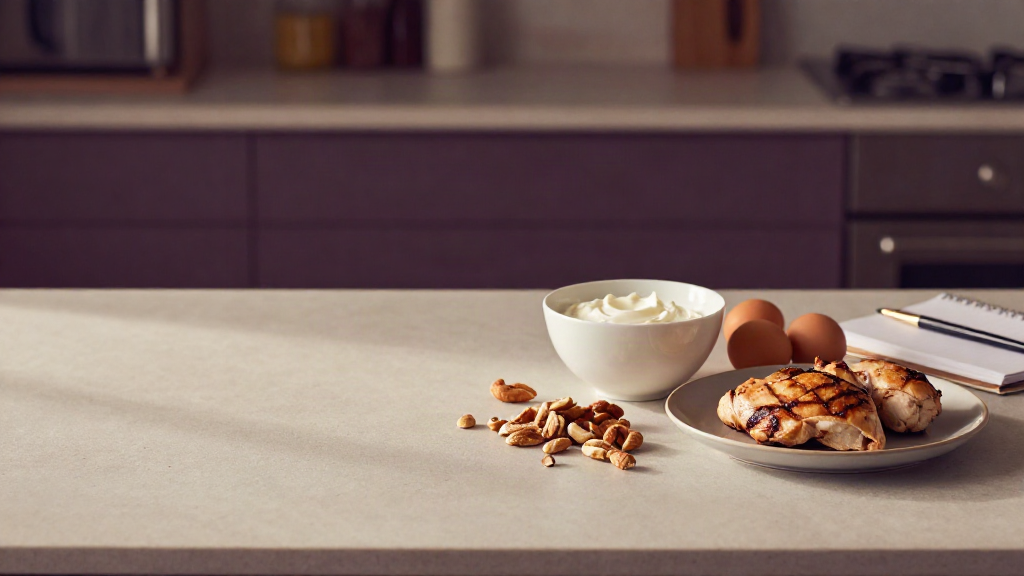
- Keep two or three no-think protein options on hand – Greek yogurt, eggs, rotisserie chicken, cottage cheese, canned tuna.
- Front-load breakfast. It’s the meal most women underdo, and fixing it makes the rest of the day easy.
- Plan protein, not menus.
What about protein while losing fat?
If fat loss is the goal, protein does two jobs at once: it helps protect muscle while the scale moves, and it keeps you full so you are not white-knuckling your way to dinner.
The mistake is dropping calories and protein together. Keep the protein high, cut elsewhere.
And if you are losing weight with the help of a GLP-1 medication, this matters even more. Smaller portions and lower appetite make it easy to fall short on protein without noticing. Women on GLP-1s have a specific reason to treat protein as the non-negotiable part of the day.
The bottom line
A protein calculator is a starting point, not an answer key. Use it to get in the ballpark, then spend one week testing whether that number leaves you strong, steady, and not starving. Adjust by 10 grams. Repeat.
No crash diets. No complicated meal plans. Just a number you can actually hit.
If you want the whole framework laid out for you – how much protein, which foods, and how to build it into real meals without tracking – The High-Protein Handbook is the complete eating guide for women 40+ who want to lose fat and keep muscle.
Leave a Reply